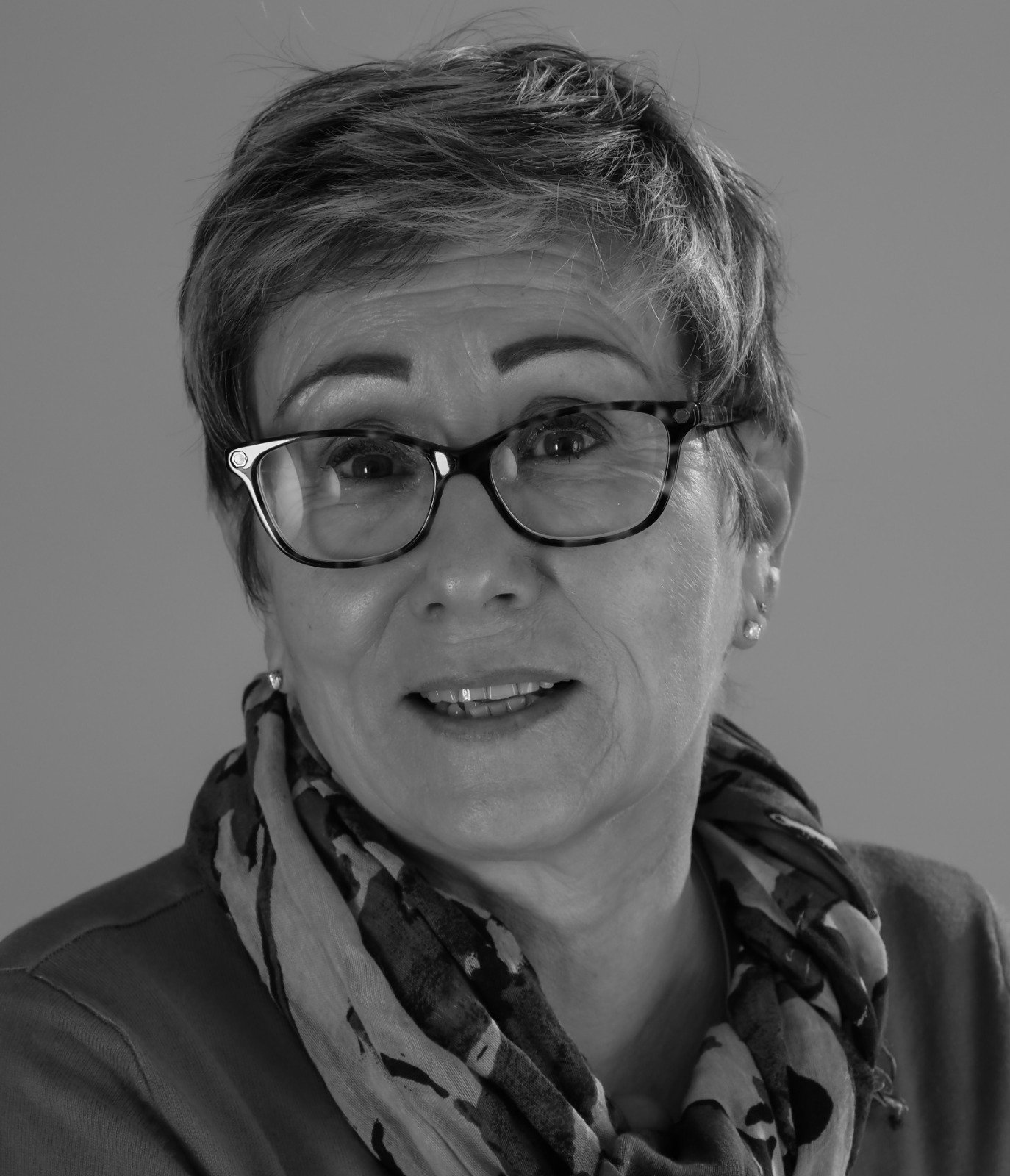
Michela Luise is an environmental communicator and nature guide. For many years, she has been involved in education and sustainability, working with schools, organisations and awareness-raising initiatives focused on the environment, the local area and local communities.
For years, she has been involved in sustainability and education, working with schools, associations and initiatives promoting active citizenship. In this interview, she reflects on the relationship between humans and the environment, on the inequalities of contemporary consumption, and on what it means today to ‘inhabit’ the world rather than merely live in it.
Q: How did your journey into environmental work and sustainability begin?
It’s been a long and layered path. I’ve always felt a strong pull towards being outdoors, long before it became something widely encouraged, especially for a girl who later grew up in the city. In secondary school I developed an interest in science, particularly geology. It was geology that gave me the perspective that still shapes how I think today: understanding how deeply human beings are shaped by their environment, and at the same time how strongly we feel the urge – often the arrogance – to shape the land we live in.
Then I began to explore ancient history, which for me was the perfect meeting point between science and the humanities. It allowed me to look at how human settlements evolved, especially in extreme environments like high-altitude areas, and to ask a broader question: not just how humans survive, but how entire ecosystems do. From there, moving into environmental work, education, and sustainability felt like a natural progression. Without really noticing it, I built a path that I now recognise as being held together by a single thread: complexity.
Q: How would you describe your role today?
My role is to make complexity understandable and accessible. I’m not a highly technical specialist. I often describe myself half-jokingly as a generalist: curious, interested in many fields, and able to connect different kinds of knowledge. What I do well is translate complex ideas into something people can engage with and share.
But there’s another dimension too: creating a welcoming space, especially for younger people. A safe place where they can ask questions, challenge ideas, and even make mistakes. I feel a strong sense of responsibility towards the younger generations. In part, the challenges they face today are rooted in the world we helped shape. So my role is also to accompany them—without being patronising, but with awareness.
Q: What was the most tangible problem you encountered?
Without a doubt, the most tangible obstacle was gender. It may seem anachronistic, but for a woman who loves exploring the countryside, being outdoors and ‘getting her hands dirty’ in the field, the path is never straightforward. At university, I experienced this difficulty almost unconsciously, accepting as normal the idea that certain environments were implicitly male-dominated.
This pressure initially pushed me towards an academic ‘comfort zone’ – ancient history – where, I discovered my true strength: the ability to connect with people and to tell stories.
I realised I could channel my sensitivity and my gift for words, and instead of limiting myself to pure research, I chose the path of scientific storytelling.
It wasn’t an escape from the field, but a natural evolution: I decided to consolidate scientific facts through storytelling, becoming a communicator capable of giving a voice to the field. Today, that gender ‘barrier’ has become my strength: I use storytelling to make science accessible, human and, above all, inclusive.
Q: What is the main point of tension you encounter in your work?
We’ve completely overturned the shape of reality. If you ask people what matters most – environment, society, or economy – most will say the economy. But that’s a fundamental misunderstanding. Human communities, in their simplest forms, knew this well: the environment comes first, because it’s what makes survival possible. Society grows from that, and only then does an economy emerge.
Today we think in anthropocentric terms rather than ecocentric ones. We no longer see ourselves as part of a system, but as something separate from – and dominant over it. And that has huge consequences. We may well be the only species knowingly heading towards its own extinction.
Q: How does this connect to the tensions between sustainability and economic inequality?
One of the biggest issues is that we ignore inequality. Talking about sustainable consumption without considering people’s economic realities is deeply unfair. You can’t meaningfully discuss ethical food choices or fast fashion with someone who has no access to alternatives. Sustainability cannot become a luxury. This is where you really feel both the complexity – and the limits – of this work.
Q: How does your work with the association fit into this?
The association is, first and foremost, a network – a space where different skills and perspectives come together. For me, it’s essential to think systemically: to move away from constantly reacting to emergencies and start anticipating instead.
Two key ideas guide my work at the moment:
anticipation and de-normalisation.
We need to stop treating unsustainable behaviours and models as normal – whether environmentally or socially. At the same time, we need to get better at understanding the consequences of our actions in advance, rather than always responding too late.
Q: What kind of people do you encounter through your educational work?
We work with all age groups, from very young children to adults. What I notice more and more is how fragmented information has become: everything is fast, specialised, and surface-level. That makes it difficult to reach what I would call real education, which requires time, continuity, and depth.
We don’t just target industry professionals or those who are already ‘on board’. Our real aim is to inspire cross-pollination. We organise initiatives that take sustainability beyond the usual circles, engaging ordinary citizens who may initially be drawn in by curiosity but leave wondering whether this vision might not be ‘their own vision of their role in the world’. We believe that sustainability should not be an exclusive club, but an approach that speaks to each and every one of us.
There’s a lot of talk about “green skills”, but often they remain just that – words. These are not technical skills; they’re transversal. They require a shift in perspective, not just behaviour. And without acknowledging social and economic differences, these ideas risk remaining abstract.
Q: What is the strongest obstacle you encounter when discussing the environment?
The main obstacle is precisely the lack of systemic thinking. Many people struggle to see the deeper connections: they fail to recognise, for example, how the biodiversity crisis is closely linked to their household finances or social stability.
This is precisely the challenge for communicators: to dismantle the idea that sustainability is a ‘luxury’ for peaceful times and to demonstrate that it is, in fact, the only tool we have to manage the current crises. We must help people connect the dots, transforming fear into an understanding of complexity.
Q: Is there a topic you feel is particularly important right now?
Yes: agrobiodiversity.
When you study the history of agriculture – from the Neolithic revolution onwards – you realise how much the relationship between humans and the environment has always been a process of mutual adaptation. Local varieties, native breeds, traditional farming practices – they’re all the result of a long-term balance.
That’s why I believe small-scale farming and local producers hold immense value – culturally, ecologically, and socially. And it’s essential that they are included in decision-making spaces, especially in discussions around food policy. You can’t talk about food systems without the people who actually produce food.
Q: What role does activism play today?
Extremes have a role. They shake things up, they force us to question ourselves. But the real issue isn’t young activists, it’s us, the adults. We are the bottleneck. We don’t listen, we judge, and we often fall into a paternalistic mindset. The intensity of younger generations’ reactions is, in many ways, a response to that. So perhaps the starting point should be simple: listening.
Q: What does it mean to you to ‘inhabit’ a place, rather than simply live there?
To answer this question, we must go back to the very root of the word: ‘abitare’ derives from ‘habere’, to have, but with a sense of continuity. It is not a predatory possession, but a constant relationship.
There is a world of difference between living in a place and inhabiting it. Living is a passive, almost consumerist act: we use the territory as a service, exploit its resources and pass through it. Inhabiting, on the other hand, means committing ourselves to ensuring that place can continue to provide us with the best conditions for life.
Inhabiting a territory means knowing every aspect of it, not just its aesthetic one. It means recognising its fragility, studying its rhythms and understanding its profound balance. Only when we inhabit a place do we cease to be strangers to it and become its custodians: we understand that the health of that woodland or that watercourse is, quite literally, our own health. Inhabiting is the act of awareness that transforms a geographical space into a shared home.
Q: If you had to summarise the essence of your work today?
I’d say this: helping people reconnect. Reconnect with the complexity of the systems we live in, with the places they inhabit, and with the consequences of their actions. Because without that awareness, real change isn’t possible.
And above all, to remember that we are not separate from this system.
We are part of it.